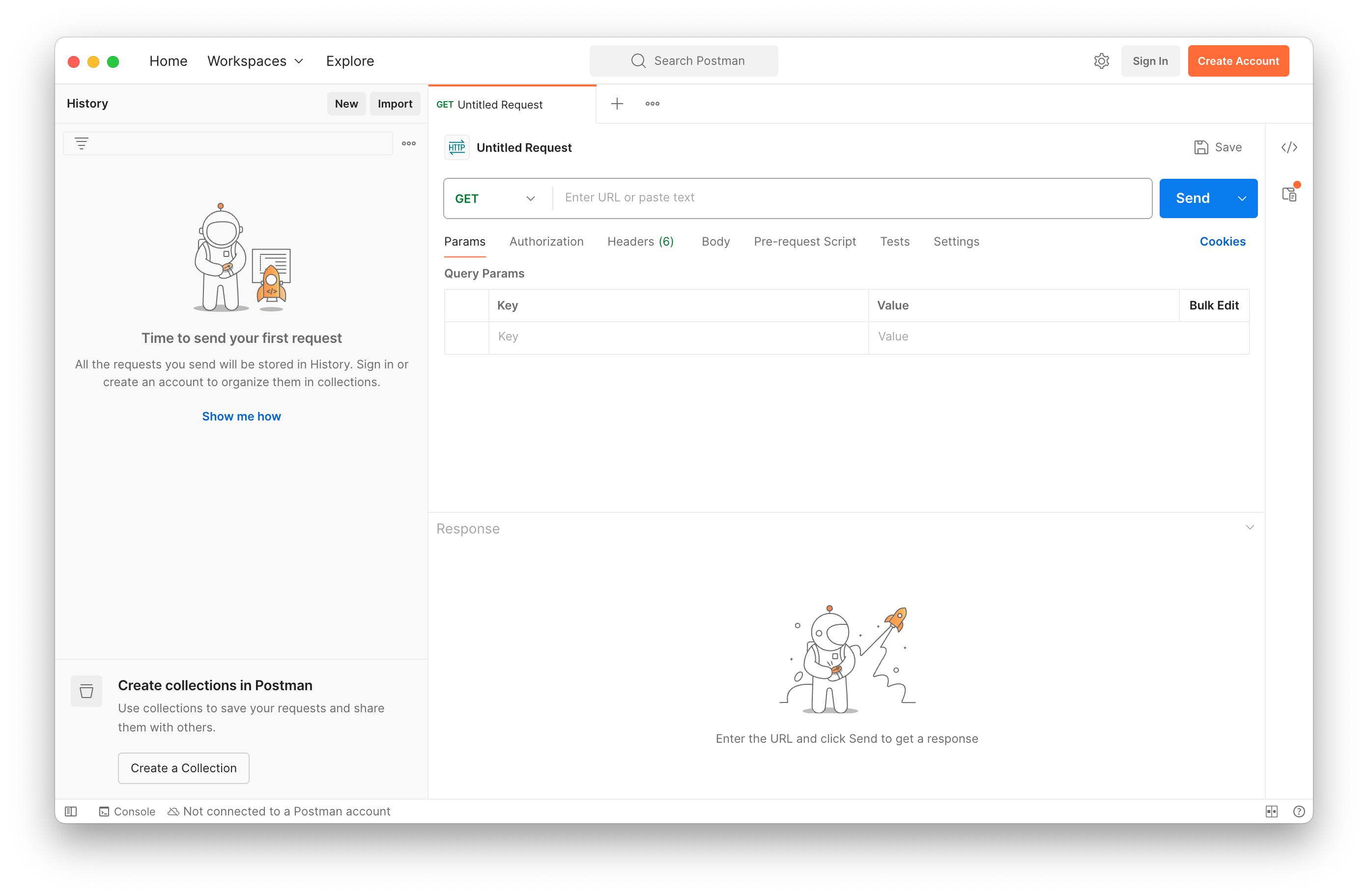
 Postman 을 시행한 이후 처음 등장하는 화면이다. 위쪽에는 Request 에 대한 부분이며, 아래에는 Response 에 대한 부분이다.
간단한 test 를 위하여 REST API 를 제공하는 https://jsonplaceholder.typicode.com/ 을 사용해보자.
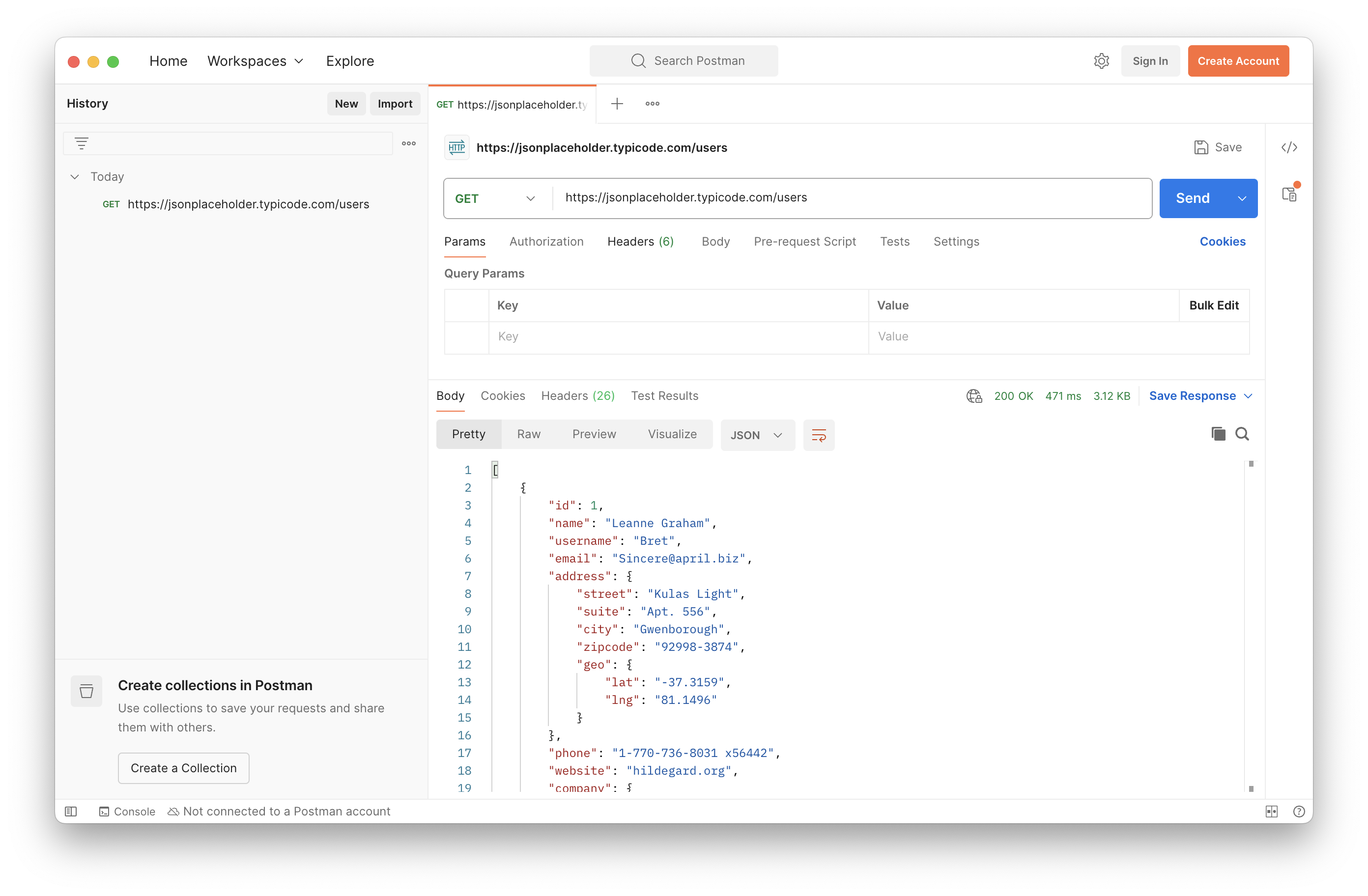 JSONPlaceholder Service 에서 제공하는 API 중에서,
 /users 를 사용하여 테스트한 결과이다. 우선 HTTP Response Message 에서 확인했듯이, Body 부분에서 JSON 형태로 data 가 전달된 것을 볼 수 있다.
우측 중단 부분에서는 200 이라는 Successful Status Code 가 전달된 것을 볼 수 있으며, Headers tab 에서 Content-Type, Date 등의 data 에 대한 metadata, 즉 부가 정보를 확인할 수 있다.
Spring REST Controller
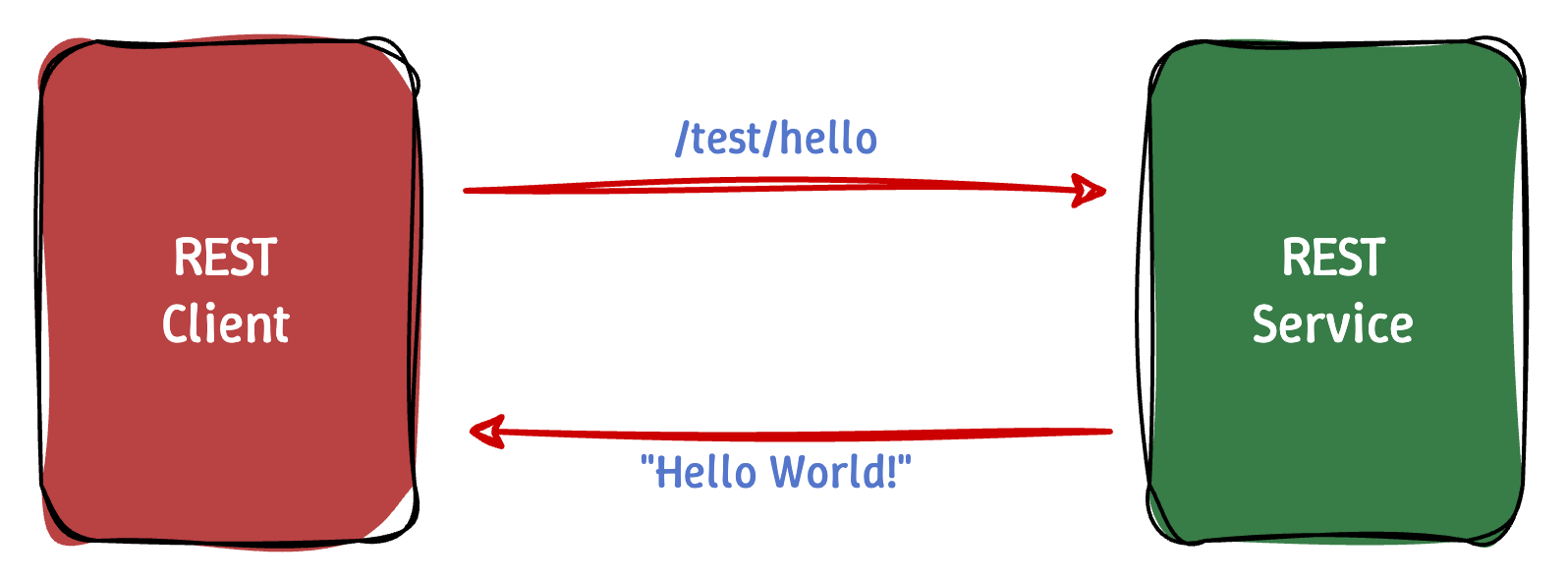
이번에는 실제 Spring Boot Project 에서 REST Controller 를 만든 뒤에, Postman 을 이용하여 request 와 response 를 test 해보자. 우선 위 이미지의 구조를 기반으로, 간단하게 문자열을 출력하는 Handler Method 를 하나 생성하여 REST API 를 만들어보자.
@RestController
@RequestMapping("/test")
public class DemoRestController {

    @GetMapping("/hello")
    public String sayHello() {
        return "Hello World!";
    }
}
이제 Application 을 실행하고 Postman 에 GET method 로 request 를 보내보자.
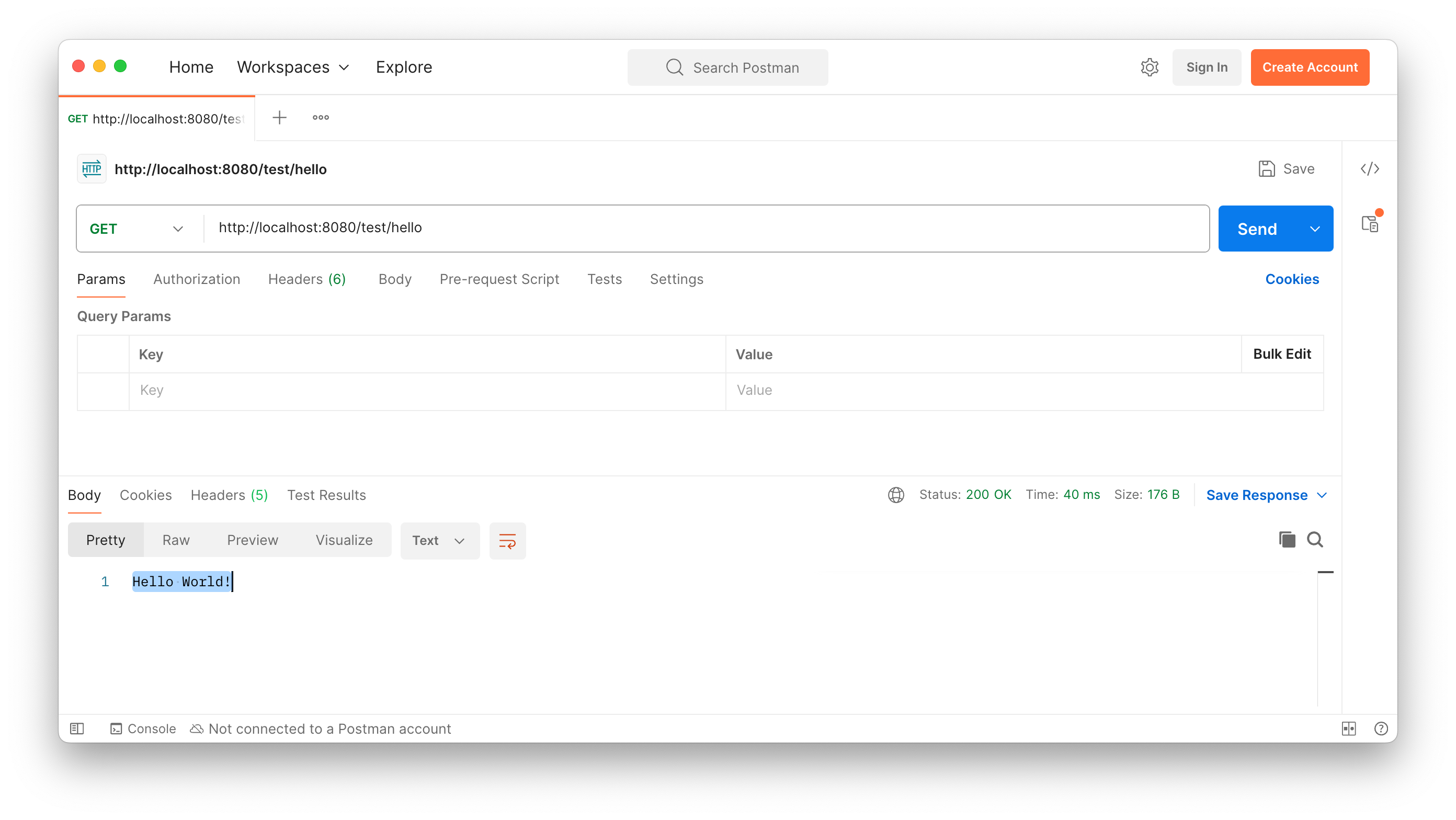 위와 같이
위와 같이 "Hello World!" 라는 문자열이 reponse message 의 body 부분을 통하여 잘 전달된 것을 볼 수 있다.
이 정도는 그냥 Google Chrome 과 같은 browser 에서도 할 수 있는데, 왜 Postman 과 같은 Client Tool 을 사용하는 것일까?
간단한 GET request 에서는 차이점을 구별하기 어렵다. 하지만 POST, PUT 등과 같은 복잡한 HTTP Method 를 test 할 때에는 API test 에 필요한 기능을 다양하게 제공하기 때문에 효율적이다.